
Shape / A Society field guide
A smoother silhouette.
Contour, skin, and dimpling are different conversations.
The way fabric falls over hips, thighs, or arms can lead you toward “body sculpting.” Before comparing treatments, separate the outline of an area from the texture and looseness of the skin over it.
Find your starting pointHips & thighs · Skin laxity · Dimpling
01 / Get specific
What is behind “smoother” for you?
Choose the concern you want to describe. Similar-looking goals do not necessarily call for the same approach.
The outline of an area
Think in contours.
A local change around the hips or thighs is a contour question. Identify the area you mean instead of starting with a full-body package.
Explore the hip guideDimpling on the surface
Separate texture from volume.
Dimpling is a surface concern. Fat reduction and cellulite treatment are not interchangeable; ask the clinician to name which objective the proposed treatment serves.
Explore the thigh guideSkin that feels loose
Name the skin concern.
If the issue is skin that hangs or folds, point that out. Ask how much change the proposed treatment can reasonably deliver and what would remain.
Explore the arm guide02 / Know the difference
Compare the objective before the device.
Keep these distinctions in view when a practice describes “sculpting,” “smoothing,” or “tightening.”

Outline
Localized contouring
What to understand
Some devices may change a small local fat bulge or circumference.
Reducing fat does not automatically address dimpling or excess skin.
Before committing
Ask which area is being treated and how the practice will assess a change.
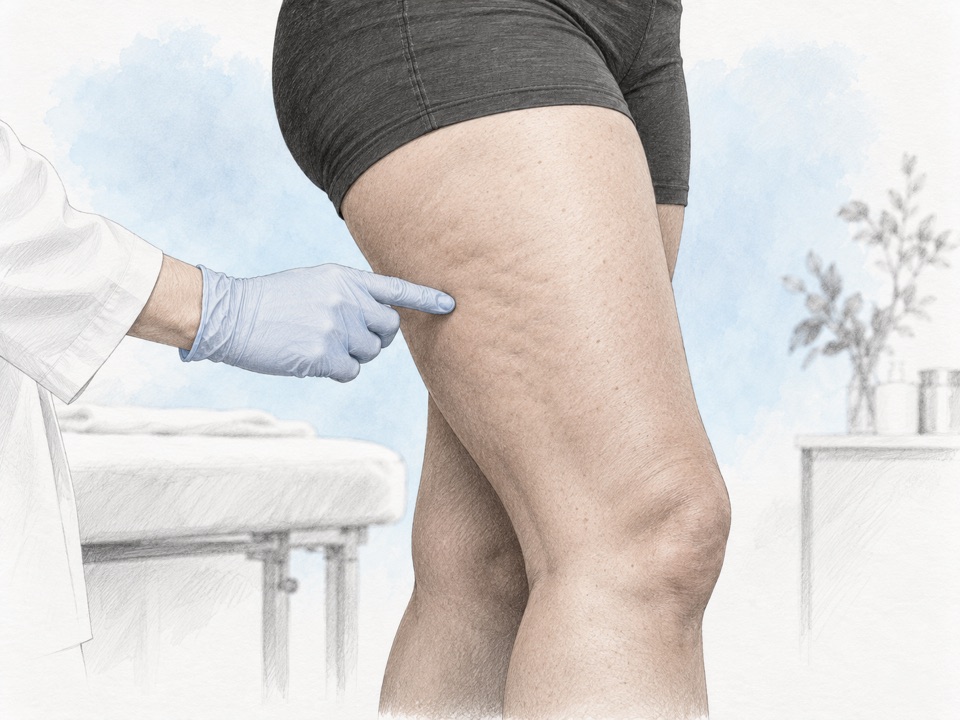
Surface
Cellulite-focused assessment
What to understand
A consultation can establish whether the surface concern is cellulite and which options target it.
Some non-invasive improvements may be temporary.
Before committing
Ask about durability and repeat treatment before comparing the headline price.
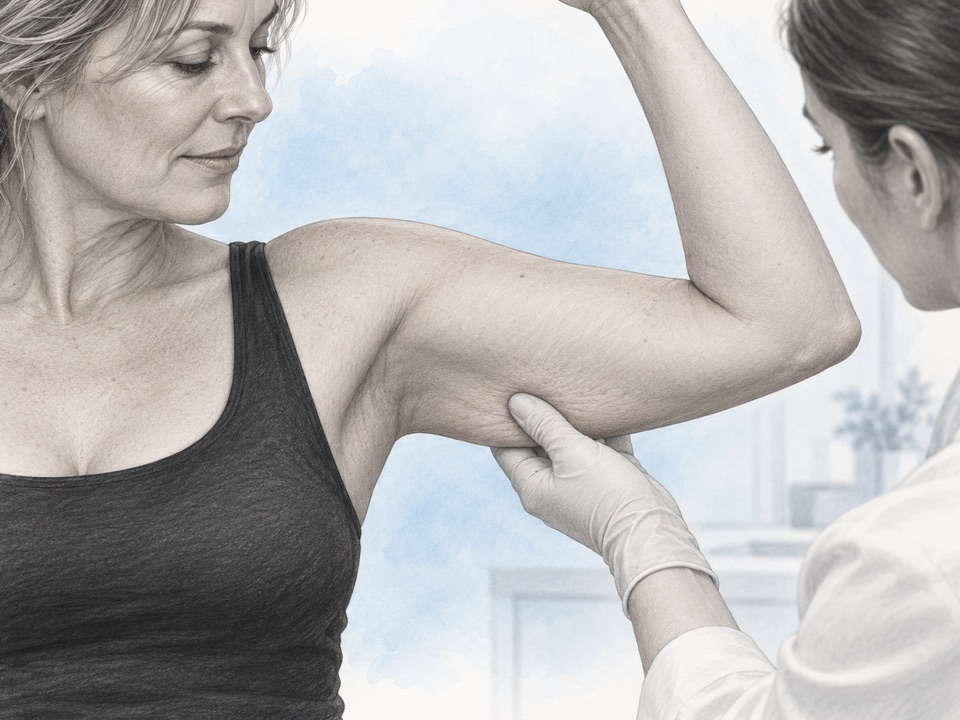
Skin
Skin-laxity assessment
What to understand
The discussion should focus on skin looseness and a realistic degree of improvement.
A plan for changing volume may leave a skin concern unresolved.
Before committing
Ask whether the treatment can meet your goal or whether referral is more appropriate.
AI-generated editorial illustrations show treatment settings and assessment areas. They do not depict real patients or treatment results.
Options to research and discuss. A qualified clinician must assess suitability; choosing a goal here does not recommend a procedure.
The detail that matters
“Non-invasive” still deserves a risk discussion.
Risks vary by technology. With fat freezing, a rare complication can enlarge the treated fat instead of reducing it and may require surgery. Ask about the risks of the exact device being proposed.
Understand device-specific risksPick one area to assess
Hips, thighs, and arms are different treatment areas. Start with the one that matters most to you.
Look for honest comparisons
Posture, clothing, and lighting can alter a silhouette. Request examples that keep those conditions consistent.
Include maintenance in the price
A temporary improvement and a lasting change have different practical commitments. Ask which is being described.
03 / Take something useful with you
Your consultation brief.
Put your goal and questions in one place. Download your notes to bring to an appointment.
When you are ready
Look beyond the package name.
Browse body-contouring practices and confirm whether they assess your specific concern before booking.
Sources & editorial notes Updated 17 October 2026
Educational information from the sources below, checked 17 October 2026. This guide is not a personal treatment plan and has not been independently reviewed by a clinician. Illustrations are artistic references, not patient results.