
Skin & hair / A Society field guide
Shoulders on show.
For the dress, the holiday, or simply your everyday.
If your shoulders or back are the focus, start by naming what you see: active breakouts, flat marks left behind, or changes in the skin’s surface. That distinction is more useful than booking a generic “back facial.”
Find your starting pointBack & shoulders · Marks · Event timing
01 / Get specific
Which detail are you noticing?
The next useful step depends on whether the concern is still active, has left colour behind, or has changed the skin surface.
Active breakouts
Address what is happening now.
If new spots keep appearing, the first conversation is about controlling the breakouts. Deep or painful back acne is a reason to seek a dermatologist’s assessment.
Read the back-acne guideFlat marks after spots
Colour and scarring are different.
A flat dark mark after a spot clears is usually a pigment change rather than a scar. Ask which description fits what you are seeing before choosing a treatment.
Understand marks and scarsRaised or indented texture
Name the change in the surface.
Raised or indented areas may involve scarring. A clinician should assess the type and whether breakouts are still active before discussing procedures.
Read about scar-focused treatment02 / Know the difference
Start with the concern, then the treatment.
A facial, a peel, and a scar procedure are not interchangeable. Keep the objective visible when comparing options.

Active spots
Acne assessment
What to understand
A clinician can assess persistent breakouts and discuss an appropriate care plan.
A cosmetic treatment alone may not address why new spots keep appearing.
Before committing
Tell them about painful or deep spots, your routine, medicines, and what you have tried.
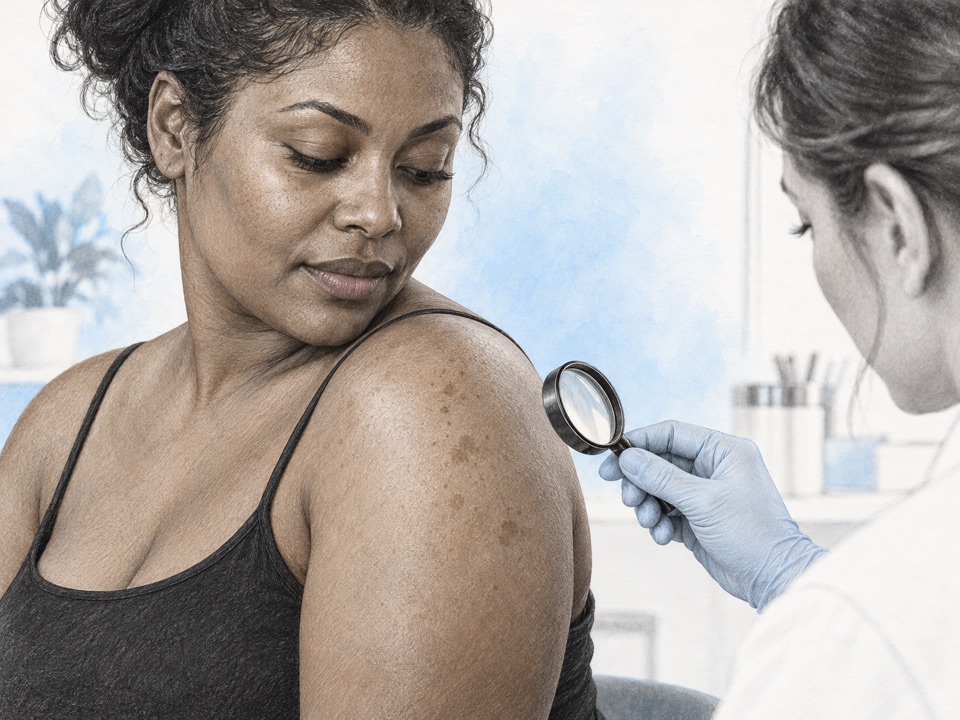
Leftover colour
Pigmentation assessment
What to understand
Ask whether flat marks are post-inflammatory pigmentation and which options fit your skin.
A peel is not automatically the right first step.
Before committing
Discuss pigment-change risk, sun exposure, recovery, and the plan if irritation occurs.
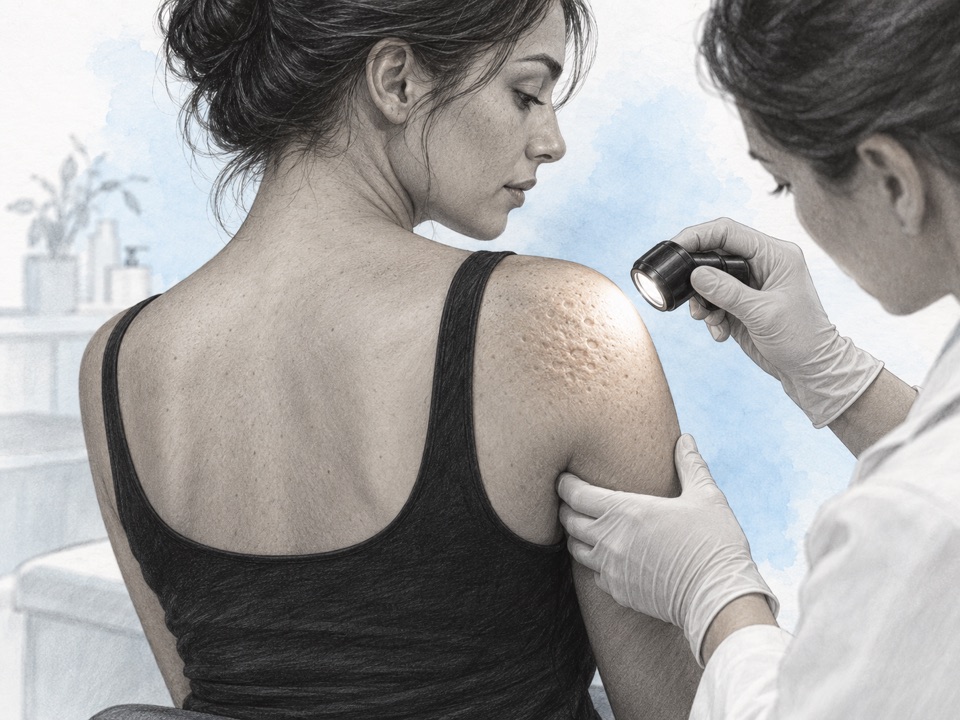
Surface change
Scar assessment
What to understand
Treatment planning depends on the kind of scar and whether the acne is controlled.
A single treatment may not address every scar type.
Before committing
Ask about the intended degree of improvement, the course of care, and when to judge a result.
AI-generated editorial illustrations show treatment settings and assessment areas. They do not depict real patients or treatment results.
Options to research and discuss. A qualified clinician must assess suitability; choosing a goal here does not recommend a procedure.
The detail that matters
A date is useful. A last-minute experiment is not.
The AAD notes that back acne may start improving after six to eight weeks, while clearing can take three to four months. Tell the clinician your date so the plan reflects the time you actually have.
Read the AAD back-acne guideBring the actual date
Mention the event, holiday, or travel. Ask what is realistic by then and what should wait.
Include the everyday details
Talk about workout clothing, friction, skin products, and your current routine. Avoid scrubbing or picking at spots.
Know the aftercare
Ask how clothing, exercise, swimming, and sun exposure could affect recovery from any proposed procedure.
03 / Take something useful with you
Your consultation brief.
Put your goal and questions in one place. Download your notes to bring to an appointment.
When you are ready
Choose the right kind of consultation.
For active, deep, or painful acne, start with a dermatologist. For cosmetic options, confirm that the practice assesses the concern before offering treatment.
Sources & editorial notes Updated 17 October 2026
Educational information from the sources below, checked 17 October 2026. This guide is not a personal treatment plan and has not been independently reviewed by a clinician. Illustrations are artistic references, not patient results.